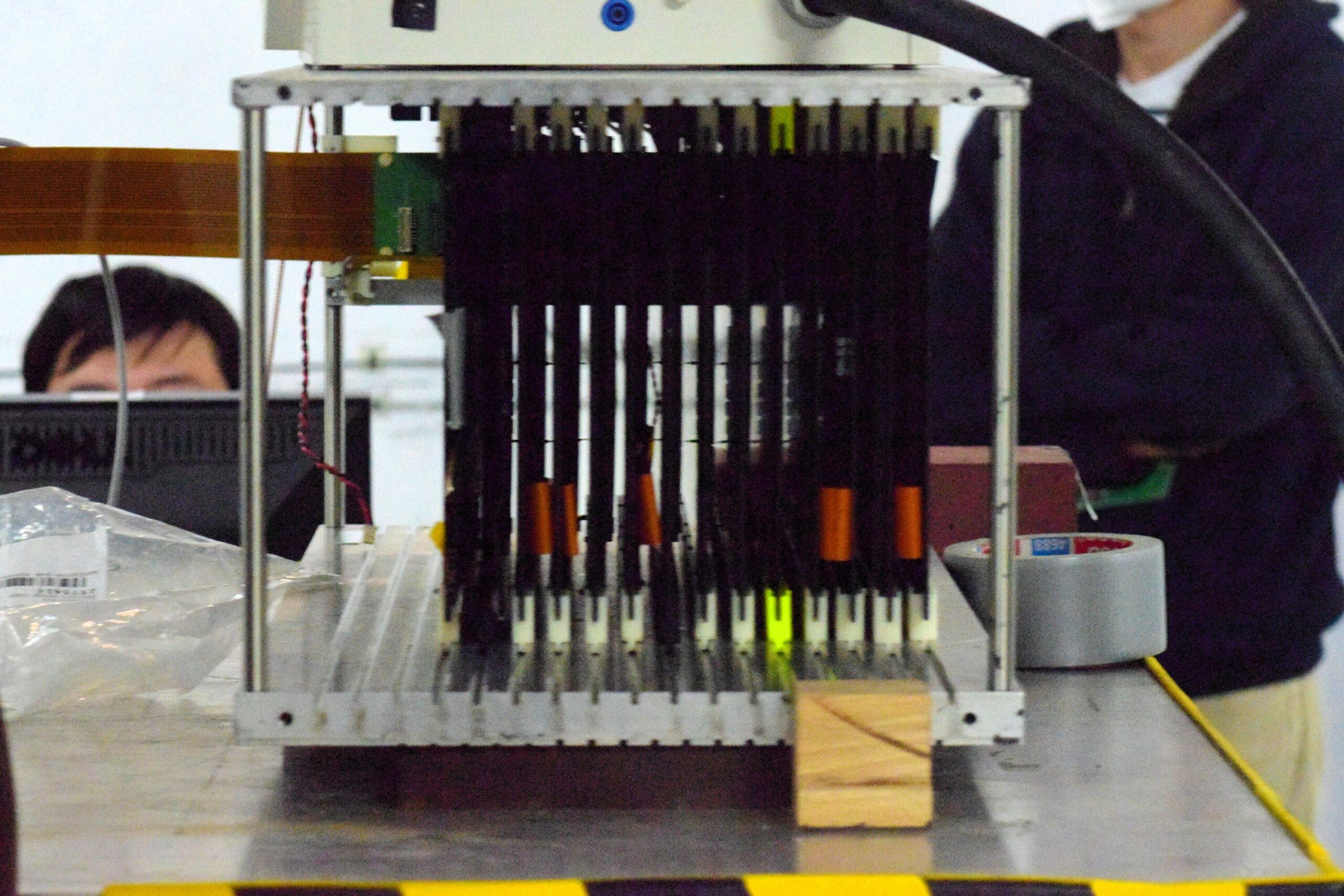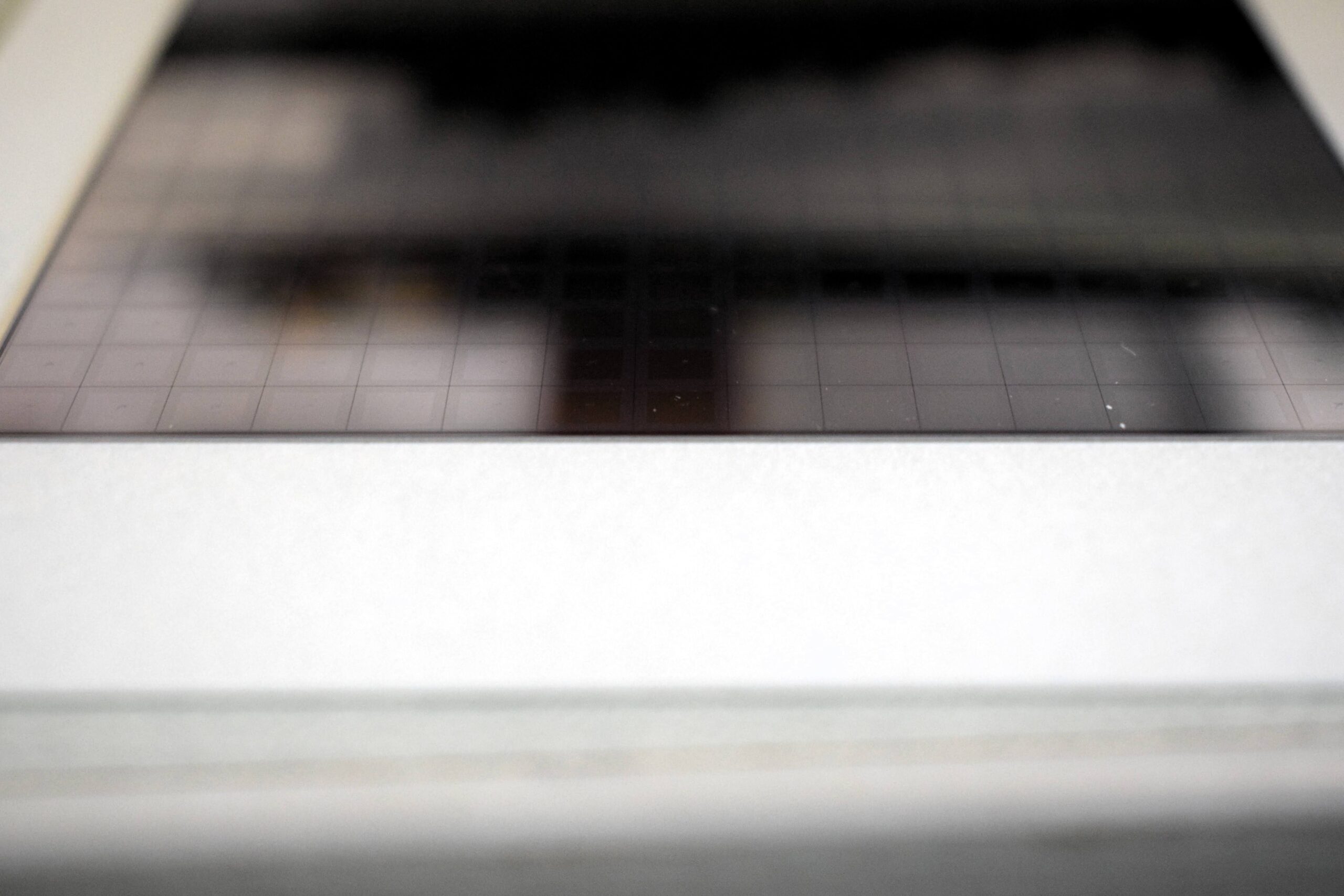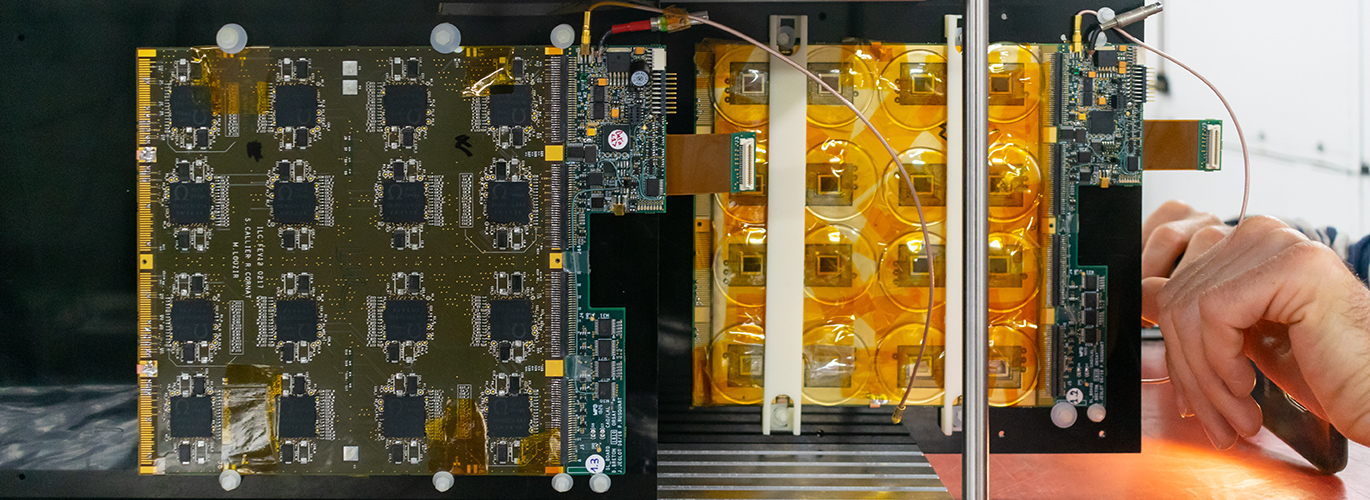
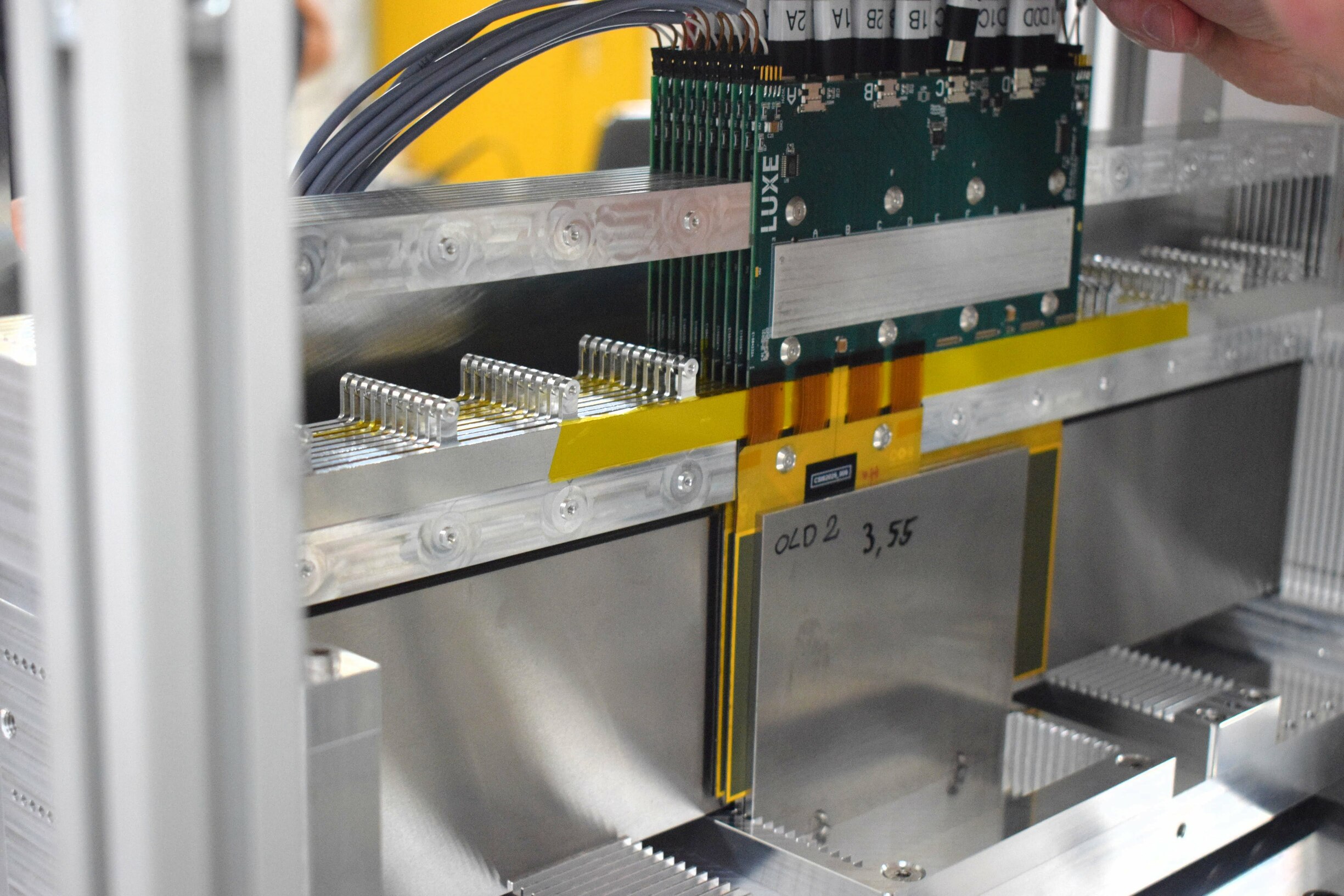
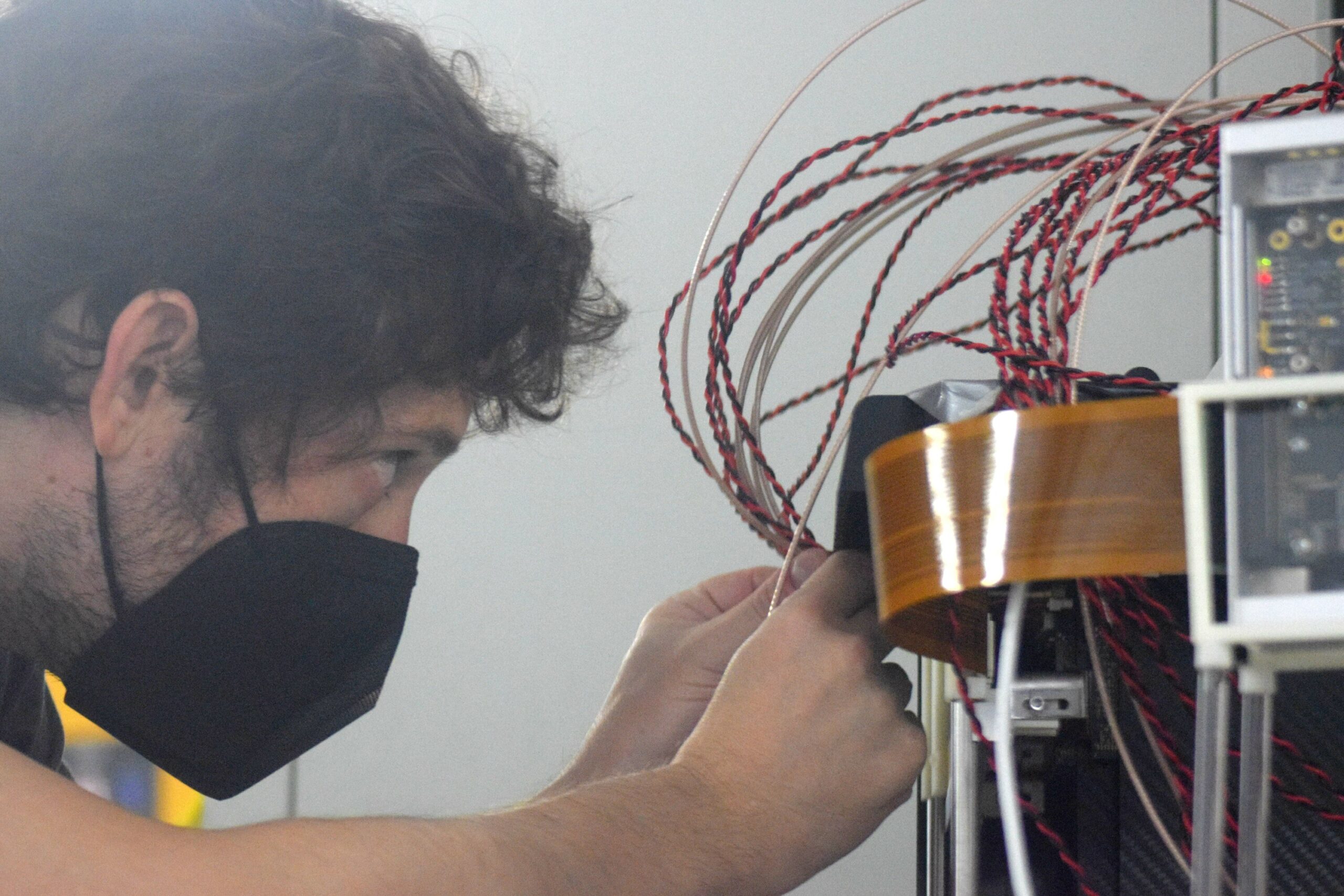
The design and R&D of this prototype is conducted by CALICE and it is oriented at the baseline design of the ILD ECAL. The ILD ECAL is a sampling calorimeter of 24X0 of thickness (in the barrel region) and it uses silicon (Si) as active material and tungsten (W) as absorber material. The choice of Si and W allows the construction of a very compact calorimeter made up of compact active layers with small cell size (high granularity) in the transverse and longitudinal planes. It will consist of an alveolar structure of carbon fiber into which the slabs made up of tungsten plates and active sensors will be inserted. The very-front-end (VFE) electronics will be embedded in the slabs. The silicon sensors will be segmented in squared cells of 5×5 mm², featuring a total of∼100 million channels for the ECAL of the ILD. To reduce overall power consumption, the ILD ECAL will exploit the pulsed bunch structure foreseen for the ILC: the lepton bunchs trains will arrive within acquisition windows of∼1-2 ms width separated by ∼200 ms. During the idle time,∼99% of the time, the bias currents of the electronics will be shut down. This technique is usually denominated power pulsing. In addition, as the PF techniques demands minimum dead material in the detector, the design of the ILD foresees the calorimeters (hadronic and electromagnetic) to be placed inside the magnetic coil that provides magnetic fields of 3-4 T.
Members of the AITANA group are involved in the silicon-tungsten electromagnetic calorimeter, SiW-ECAL group. The SiW-ECAL team is composed by several groups from: France (IJCLab – ex LAL, OMEGA, LPNHE, LLR, LPSC), Japan (Kyushu University, KEK ), South Korea (SKK University) and Spain (the AITANA group from IFIC and the CIEMAT).
Compact silicon-tungsten calorimeters provide a highly granular and mechanically compact solution for precision electromagnetic calorimetry. Their small Molière radius, fine transverse segmentation and reduced dead material make them particularly well suited for applications requiring efficient particle separation, precise energy measurements and operation in very forward detector regions.
Within the FCAL Collaboration, these technologies are developed primarily for very-forward calorimetry and precision luminometry at future electron-positron colliders, with direct relevance for FCC-ee and the Linear Collider Facility (LCF). In these environments, compact silicon calorimeters can provide precise luminosity measurements and contribute to beam-related and electroweak precision observables under challenging occupancy and radiation conditions.
The same detector concepts also provide attractive solutions for experiments beyond collider luminometry. A prominent example is LUXE, where compact silicon-tungsten calorimeters are used to measure the spectra and multiplicities of electrons and positrons produced in strong-field QED interactions. These measurements are essential to probe non-linear and non-perturbative QED effects at effective field strengths approaching and exceeding the Schwinger limit.
For LUXE, two complementary electromagnetic calorimeter concepts are being developed. ECAL-P is based on compact calorimeter technologies developed within FCAL, while ECAL-E builds on highly granular silicon-tungsten calorimeter technologies originating from CALICE and now pursued within the CERN DRD Calo Collaboration. Together with the tracking system, these calorimeters provide independent measurements of particle multiplicities and energy spectra, improve control of beam-related backgrounds and enable in situ cross-calibration of the detector system.
These developments therefore establish a strong technological link between precision luminometry at FCC-ee and LCF, detector R&D within FCAL and DRD Calo, and compact calorimetry for experiments such as LUXE.
The AITANA group is involved in the design, optimisation, construction and test of compact silicon calorimeters, with activities spanning detector R&D for future collider experiments and their application to the LUXE physics programme.
A. Irles is the institutional representative of the IFIC in the following collaborations:
- DRD Calo
- FCAL
A. Irles es deputy coordinator of the DRD Calo-WP1 package
Around the world with CALICE

The SiW-ECAL Technological Prototype