Accelerators for the next large Higgs/Top/EW/BSM factory
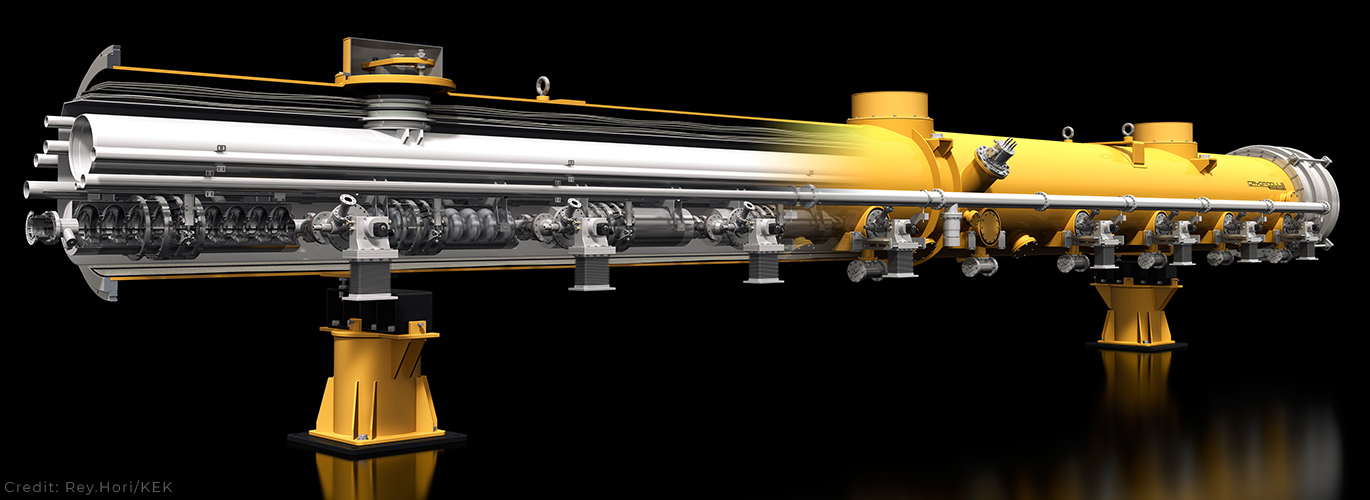
Particle accelerators based on electron and positron beams provide exceptionally clean experimental conditions and are therefore considered precision instruments for high-energy physics. In Europe, the Future Circular Collider (FCC) programme at CERN is the leading proposal for the next generation of particle colliders, with FCC-ee as its first stage.
FCC-ee will collide electrons and positrons at several centre-of-mass energies, providing very large samples of Z and W bosons, Higgs bosons and top quarks. Its ambitious precision goals impose demanding requirements not only on the collider itself, but also on its injector complex, accelerating systems, beam instrumentation, diagnostics and beam-control technologies.
The development of FCC therefore builds on extensive accelerator expertise accumulated at CERN and its collaborating institutes through previous and ongoing accelerator programmes. In this context, the IFIC accelerator group has a long-standing collaboration with CERN, including contributions to beam instrumentation and advanced accelerator technologies developed in the framework of linear-collider studies.
This expertise provides a strong basis for contributions to the FCC accelerator programme, in particular to technologies associated with the production, acceleration, transport, monitoring and control of high-quality electron and positron beams. These activities are pursued in close connection with CERN and complement the AITANA group’s involvement in the physics and detector programme of future colliders.
The expertise developed for linear accelerators also remains relevant for possible future facilities such as the Linear Collider Facility (LCF), providing important technological synergies between the circular and linear collider programmes at CERN.
Parc Científic de la Universitat de València
C/ Catedrático José Beltrán, 2
E-46980 Paterna · Valencia · España